
The flying Asian carp have been making their way into the Great Lakes. But now a new fish—the Eurasian ruffe—is …
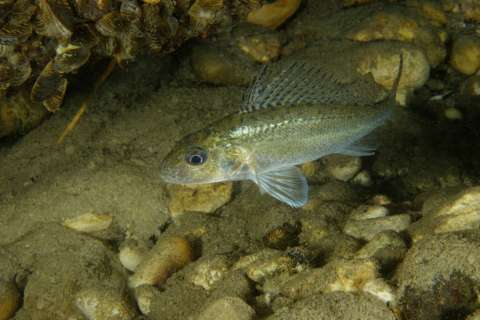
The flying Asian carp have been making their way into the Great Lakes. But now a new fish—the Eurasian ruffe—is …
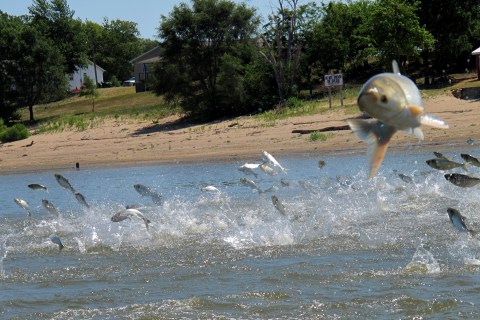
A new study proves that at least four of the invasive species have lived their entire lives in a river that feeds directly into the lakes
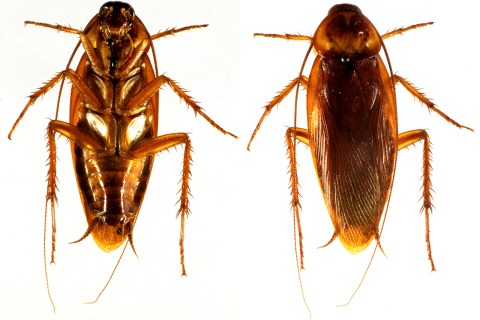
And it may be our fault
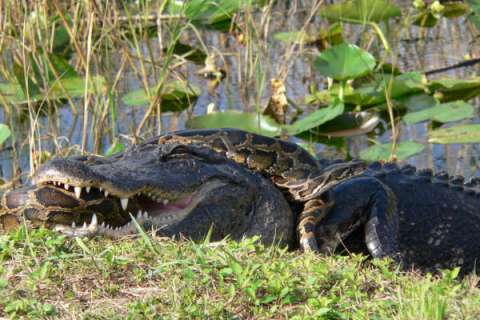
Burmese pythons are eating machines. An adult snake can grow to nearly 20 ft., and it can eat everything from raccoons to bobcats to deer to alligators, killing its prey by constriction and then swallowing them whole. On the …
Dedicated followers of this blog—thanks both of you—know that one of my areas of obsession is invasive species. That’s partially because they’re so often funny—example number one being the flying Asian carp, which I’ll get to in a moment. But invasives are a biological and visible consequence of our ultra-connected world, a …
Like all great supervillains, the Asian carp have their origin story. The fish were imported from Asia—where they’ve been raised in aquaculture for thousands of years—to the Midwest in the 1970s, where they were used in fish farms. When the waters around the Mississippi flooded in the spring, however, so would those farms—and at …
Feral camels have never gotten much love in the Australian bush. Considered to be an invasive species, they graze native plants to the point of local extinction. They walk across roads in the middle of the night. They trample fences. Now one Australian company has a plan to get rid of the camel scourge once and for all. The proposition? …
Another interesting story over on Time.com’s science page: Christy Choi writes about how the lionfish, an aquarium-pet-turned-ocean-invader with a voracious appetite and bad manners, “has residents and scientists throughout the Caribbean and Northern Atlantic worried about the threat it poses to coastal ecosystems and economies by wiping …
More frequent readers of this blog know that I’m obsessed with two things: Philadelphia sports and Asian carp. I even see some similarities between the two—Phillies fans, like Asian carp, are seen by some as an invading horde infiltrating territory that doesn’t belong to them. (Like the Asian carp, the fans are generally peaceful …
I’ve written a few times in the past about invasive Asian carp, the Chinese natives who were imported for fish farms in the Midwest, only to escape and make their way up the Mississippi River. They’re now knocking on the door of the Great Lakes, and a few of them may have even slipped past defenses and made it into Lake Michigan. The …